Upadacitinib combination therapy maintained efficacy in systemic lupus erythematosus through 104 weeks
A recent study published in Rheumatic & Musculoskeletal Diseases Open found that upadacitinib monotherapy and combination therapy with elsubrutinib maintained and improved efficacy outcomes in patients with moderately to severely active systemic lupus erythematosus through 104 weeks of treatment.  The long-term extension study followed 127 patients from the 48-week phase 2 SLEek study, evaluating an … Read more


Novel dual JAK and ROCK inhibitor shows promise for rheumatoid arthritis treatment

A new dual inhibitor targeting both Janus kinase (JAK) and Rho-associated protein kinase (ROCK) has shown encouraging results in patients with rheumatoid arthritis (RA) who failed to respond adequately to methotrexate. Findings from the phase 2 trial of CPL409116 (CPL’116) were published  in The Lancet Rheumatology.  The randomized, double-blind, dose-ranging, placebo-controlled trial enrolled 106 adults … Read more

S-ketamine preserved respiratory variability better than midazolam in fibromyalgia patients during sedation

A recent study published in PLoS One found that s-ketamine maintained respiratory adaptability more effectively than midazolam during sedation procedures. The randomized controlled pilot trial examined the effects of these commonly used sedatives on respiratory variability, which reflects the respiratory system’s ability to adapt to changing physiological demands.  The investigation was conducted as part of … Read more

Elevated serum sCD226 levels a potential biomarker for Takayasu arteritis management

A recent study published in Medicine (Baltimore) found that elevated soluble CD226 levels in Takayasu arteritis (TAK) proved useful for differentiation from giant cell arteritis, disease activity assessment, and prognosis prediction. The investigation focused on serum sCD226 as a biomarker for TAK, a condition characterized by vascular injury involving endothelial cells and immune cells, particularly … Read more

Blood urea nitrogen levels linked to increased gout risk through causal relationship

A recent study published in Medicine (Baltimore) has identified blood urea nitrogen (BUN) as both an observational and causal risk factor for gout. The findings, based on data from over 31,000 adults in the United States, suggest that this common kidney function marker could serve as a valuable predictor for the painful joint disease.  Researchers … Read more

Tirabrutinib demonstrates tolerability and B-cell suppression in systemic sclerosis phase I trial

A recent study published in British Journal of Dermatology Open found that tirabrutinib, an oral Bruton tyrosine kinase inhibitor, showed tolerability and promising mechanistic effects in patients with systemic sclerosis through B-cell activity suppression.  The randomized double-arm 52-week phase I study enrolled 16 patients with systemic sclerosis who received once-daily tirabrutinib at doses of 40 … Read more

Brain imaging successfully predicted treatment response to TNF inhibitors in rheumatoid arthritis patients

Predicting treatment response to TNF inhibitors remains challenging because of the complex and heterogeneous nature of immune-mediated diseases. Not all inflammation in conditions like RA, PsA, AS, or IBD is TNF-driven, and patient-to-patient variability adds to the difficulty. Genetic differences, such as polymorphisms in TNF or its receptors, and disease-specific immune pathways influence outcomes, but … Read more

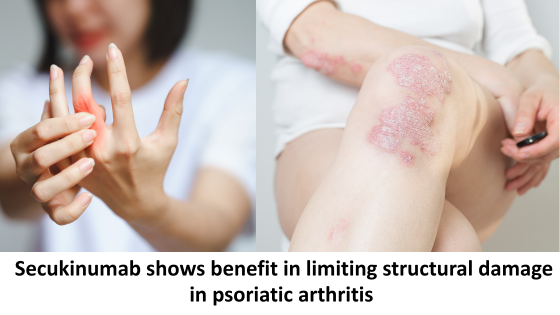
Secukinumab shows benefit in limiting structural damage in psoriatic arthritis

A recent study published in the Journal of Rheumatology found that secukinumab significantly reduced erosion volume and prevented enthesophyte progression in patients with psoriatic arthritis compared to placebo. The phase 4, double-blind, randomized, placebo-controlled trial used high-resolution peripheral quantitative computed tomography to assess structural changes in metacarpophalangeal joints over 48 weeks.  The study enrolled 40 … Read more

Sjögren’s disease linked to markedly increased risk of non-Hodgkin lymphoma

Lymphoma represents the most severe complication of Sjögren’s syndrome (SS) and is the primary determinant of mortality in affected patients. The majority of lymphomas in SS are extranodal non-Hodgkin B-cell lymphomas of mucosa-associated lymphoid tissue, most frequently originating in the salivary glands, the principal site of chronic autoimmune inflammation. Extensive research on lymphomagenesis in SS … Read more